
Perfume ingredients have evolved and what’s in a favorite may be surprising.
The history of fragrance predates the ancient Egyptians. In the past, fragrances were created from natural sources such as flowers, herbs, spices, and animal musk.
Scented products were used after bathing, to mask odors, to provide protection from harmful spiritual forces and diseases, during rituals, ceremonies, and to promote healing.¹
Back in the day, perfumes were more expensive.
Today’s competitive market and consumer demand makes scented products affordable and available to people of all ages.
Many use fragranced products daily such as perfumes, colognes, deodorants, aftershaves, sprays, and body lotions to name a few.
Manufacturers promote their scent’s miraculous ability to make the wearer more rebellious, exciting, attractive, romantic, sexy, adventurous, intelligent, and glamorous.

Commercials imply that using the right fragrance can be “life changing”.
Are perfumes life changing?
Yes but in unexpected ways.
The natural ingredients used in the past have slowly been replaced with synthetic ones. Many fragrances from the inexpensive to the top designer brands will contain a combination of harmful synthetic ingredients.
How did these ingredients become part of the fragrance recipe?
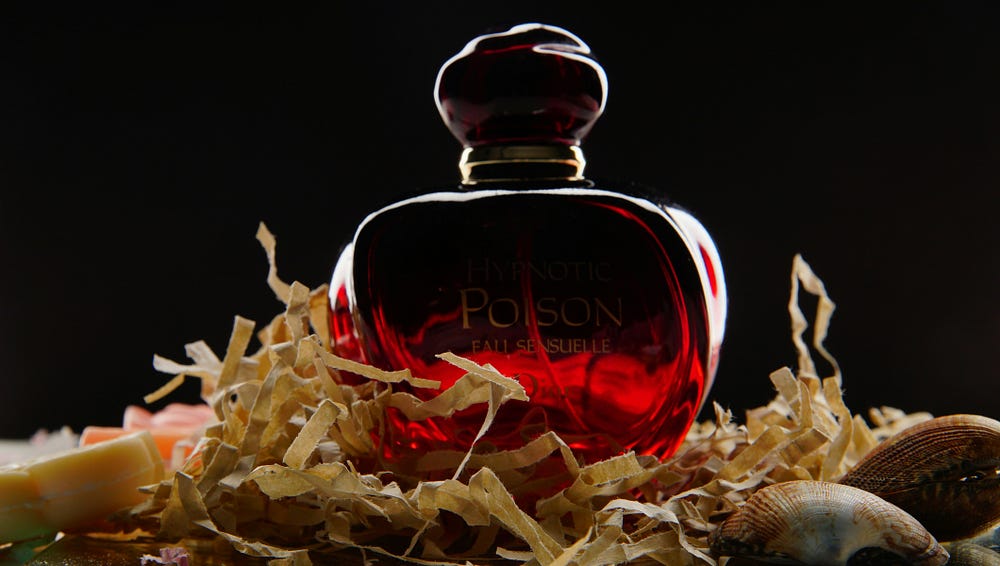
Here’s the story.
It’s cost effective for manufacturers to us the less expensive synthetic (man-made) fragrance ingredients.
Since mass production favors the use of synthetic ingredients, the natural ingredients of many products have been either diluted with or completely replaced by them.
It’s acceptable practice for fragrance ingredients to remain unlisted by manufacturers because they are considered “trade secrets” by the FDA and protected from disclosure.²
Why should we be concerned about perfume ingredients?
Since manufacturers aren’t required to list fragrance ingredients under the “trade secret” exclusion, we may not know exactly what’s in the product we purchase, apply to our skin, and inhale.
Research notes that synthetic scents can disrupt hormonal balance, irritate skin, act as allergens, and affect growth and development.
Studies on unregulated, synthetic ingredients aren’t as highly publicized as fragrance promotions, but they should be.
Direct and indirect exposure has been associated with skin irritation, hives, headaches, nasal congestion, difficulty breathing, increased heart rate, and nausea among others.
A 2010 study by the combined efforts of the Campaign for Safe Cosmetics (a project of the Breast Cancer Prevention Partners), Commonweal, and the Environmental Working Group found 38 non-disclosed fragrance ingredients in 17 popular brands containing an almost even amount of “secret” versus labeled ingredients.
The products reviewed contained an average of 14 undisclosed, secret ingredients. The highest contained 24. Many ingredients were found to be sensitizing meaning that exposure to the ingredients increased the chance of a person developing future allergic reactions.³
According to this collaborative study, 66% of the unlisted ingredients had not been assessed for safety. Of those included or listed on a product’s label, 19% had not been assessed for safety.³
That’s just the tip of the iceberg!

This is where the study gets more disturbing. I apologize for that, but it’s important information to share.
Here’s some more information noted by this collaborative effort.³
- Synthetic fragrance ingredients were noted to display hazardous properties and have the tendency to settle in human body tissues.
- Diethyl phthalate (DEP) which has been linked to adult sperm DNA damage was found in 97 percent of Americans.
- Synthetic musk was discovered in breast milk as well as contained in fat tissue.
- Thyroid, estrogen, androgen, and progesterone levels were also found to be affected as the chemical ingredients mimic natural hormones and disrupt hormonal balance and function.
- Galaxolide and Tonalide, components of synthetic musk, were discovered in the umbilical cord blood of newborns.
- Diethyl phthalate (DEP) containing products used by pregnant women were associated with the abnormal development of male reproductive organs in babies and attention deficit disorder (ADD) in children.
More detailed results of this study, including the specific brands tested with 150 plus reference sources, are available on the Environmental Working Groups website. Click here for the study, if interested.
What steps can we take to find safer alternatives and healthier products?

Here are some ways to find safer products.
- Buy from companies that voluntarily list all ingredients including those contained in the fragrance portion of the product.
- Cross check the names of the listed ingredients. Synthetics have many names and some are complicated. I find if the name looks chemical, the ingredient probably is.
- Call customer service for the unlisted product ingredients. Sometimes customer service doesn’t know, but it’s still worth trying.
- Learn the names of reputable brands that use high quality chemical free product ingredients.
- Research products and read credible product reviews from other customers.
- Read product labels but remember that some fragrance ingredients may fall under the “trade secret” exclusion and remain unlisted.
- Be familiar with and try to avoid the synthetic fragrance chemicals noted to be harmful. Here’s a list from the Campaign for Safe Cosmetics (CSC) in alphabetical order.⁴
Ingredients to avoid.
- Acetaldehyde
- Benzophenone
- BHA (Butylated hydroxyanisole)
- BHT (Butylated hydroxytoluene)
- Benzyl salicylate
- Benzyl benzoate
- Butoxyethanol
- Butylphenol methylpropional
- Chloromethane (methyl chloride)
- Dichloromethane (methylene chloride)
- DEP (Diphenyl phthalate)
- Eugenyl methyl ether (Methyleugenol)
- Formaldehyde
- MEA, DEA, and TEA (ethanolamines)
- Methanol
- BP-3 (Oxybenzone)
- Propyl paraben (Propyl p-hydroxybenzoate)
- Resorcinol
- Styrene
- Synthetic Musk (Tonalide, Galaxolide, Musk ketone, Musk xylene)
- Titanium Dioxide (TiO2)
- 1,4-Dioxane
- Ethylbenzene
- Vinyl acetate
Click here if interested in CSC’s article with details on how each one can affect the body.
What about essential oils and other products labeled as pure, natural, and organic?

Products labeled as natural, pure, and organic (without the certification) can vary widely in ingredients depending upon how they are regulated. They may be misleading so reading labels and/or calling for more detailed product information is a good idea.
Here’s something else I discovered. Some unscented and fragrance-free products may contain some synthetic fragrance to cover up the odor created by the other ingredients.
Beware of inexpensive low quality essential oils. Cheaper products aren’t better and often contain a very small amount of pure essential oil diluted with synthetics (considered adulterated) or contain synthetic ingredients only (no essential oil whatsoever). Some have caused significant harm.
Even essential oils in their purest organic or wildcrafted form need consideration as well. It’s important to be aware of the specific uses, safety precautions, contraindications, and allergy concerns specific to each oil and/or consult with a qualified aromatherapist.
Buying wildcrafted or organic oils from reputable manufacturers is always recommended.
Replacing something that has been in your life or daily routine for a very long time can be difficult, especially a favorite perfume that’s like a trusted old friend, an important part of a history that compliments us.

As difficult as it may be, it’s important to replace unhealthy products with healthy alternatives. If parting with that old favorite seems impossible, use smaller amounts less often. Even small changes can be beneficial.
Hopefully, keeping in mind that exposure affects everyone, and the harm is real will be a motivating force to find healthier replacements sooner than later.
I hope this information was helpful. Please share and pass the word to others. If you have questions, suggestions, or comments, please reach out. I would love to hear from you.
Wishing you continued wellness.
Kimberly I
Here’s a link to my favorite organic chemical free fragranced perfume by Ecco Bella.
For more content like this visit How To Choose Products With Healthier Ingredients, a listing of reputable brands with chemical free ingredients.
Sources
- Everts, S. (2021, July 19). A Brief History of Perfume: Visiting an Archive of Ancient Scents. Literary Hub. https://lithub.com/a-brief-history-of-perfume-visiting-an-archive-of-ancient-scents/
- U.S. Food and Drug Administration. (2020, August 24). FDA. Fragrances in Cosmetics. https://www.fda.gov/cosmetics/cosmetic-ingredients/fragrances-cosmetics#labeling
- Breast Cancer Fund; Commonweal; Environmental Working Group. (2010, May 12). Not So Sexy: The Health Risks of Secret Chemicals in Fragrance. EWG. https://www.ewg.org/research/not-so-sexy
- Campaign for Safe Cosmetics. (n.d.). Fragrance. CSC. https://www.safecosmetics.org/chemicals/fragrance/
 Eudaimonic Well-Being