
It’s getting colder, and the heat is on!
The house air is getting dryer and indoor humidity levels are dropping.
When house humidity levels are too low, wood as well as furniture can shrink, dry and crack. If it gets dry enough, paint and wallpaper can peel.¹

This is how dryness affects a house.
What happens to us?
Respiratory health is affected by dry indoor environments.
Here’s what can happen.
The mucus which lubricates the nares and sinuses needs moisture. Without enough, mucus thickens. The nasal and sinus passages become very dry.
This interferes with the body’s ability to filter germs and particles and may lead to illness, allergy like symptoms, blockages, congestion, headaches, earaches, and infection.
Dry nares can crack and bleed, becoming scabbed, irritated, and uncomfortable. The mouth and skin may also become dry.
The indoor humidity level can also affect our pets.

In a dry environment, pets may sneeze and have watery eyes. They may scratch more and have dry, flakey skin.
What is humidity?
Humidity is the amount of water vapor, moisture, or dampness in the air.
It’s recommended that indoor humidity levels be between 30–50%.
Keeping track of humidity using an indoor thermometer with a hygrometer feature helps monitor levels. Hygrometers measure the amount of water vapor contained in the surrounding air and are affordably priced at home stores and on-line.
Another way to measure indoor humidity is by placing a few ice cubes in an uncovered glass exposed to room air. If after several minutes, no moisture beads or condensation are noticed, the air is dry.²
I have a hygrometer so haven’t tried this one, but it sounds like a fun experiment.
What can we do to boost indoor humidity levels to prevent dryness and irritation?
Diffusers are a good option, can be run with or without essential oils, come in different sizes, deliver a nice amount of mist, are easy to clean (wipe with vinegar), and usually have an automatic shut off.
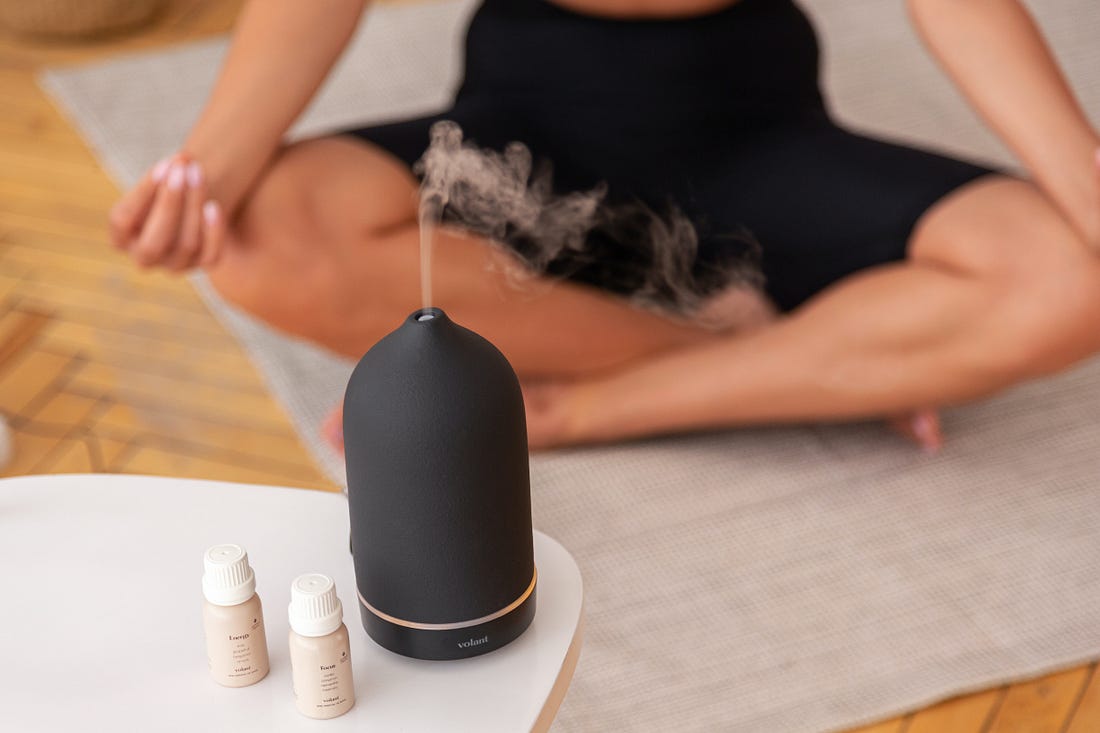
It’s beneficial to run a diffuser in the bedroom before bedtime to provide nighttime humidity.
Diffusers are affordably priced, found on-line and in retail stores with different sizes, shapes, and features available. Some even provide a nice light show!
I run some of my diffusers essential oil free using bottled spring or distilled water to avoid accidental contaminants from tap water. Manufacturers usually recommend distilled water to avoid the white residue from spring water minerals.
I haven’t noticed any residue in mine, but it’s good to check the instructions specific for each diffuser.
Humidifiers are also helpful but will collect mold if not attended to and must be cleaned regularly. Most prefer distilled or purified water as listed in the product guide.
There are ways to add moisture to indoor air if you aren’t inclined to use a humidifier. S. Regan from mindbodygreen has these suggestions listed below.²
- Humidity can be increased by cooking food on the stovetop instead of in the oven.
- Boiling water on the stovetop or in a crockpot while monitoring it closely is helpful.
- Opening the dishwasher before the drying cycle allowing the steam to escape into the air provides additional moisture.
- Placing open containers of water near sources of heat while keeping them safe from small children and pets adds moisture.
- Drying clothes on a rack indoors adds additional moisture to the air.
- Buy child and pet safe house plants to add moisture to household air.
- Showering with the door open or without running the fan is helpful.
Using Neti pots and nasal sprays to moisten nasal passages.

Other helpful products include Neti pots and nasal sprays.
I prefer nasal sprays. Neti pots seem more difficult to manage and MUST be used with distilled, sterile, or boiled tap water.
Why is the water source so important?
The use of regular tap water in Neti pots has been linked to some serious infections. Regular tap water may contain microorganisms. If you go the Neti pot route, it must be used carefully with the proper water source and only as recommended.
Saline nasal sprays are effective, and many pharmacies have their own store brands. The nasal spray I recommend and have used for many years is Xlear.
This saline nasal spray contains xylitol, a natural sugar, and is used for sinus congestion, nasal irritation and itchiness. For more information on this product refer to this link.
Our health can be affected by a dry indoor environment.

The ability of our upper respiratory tract to protect the body by filtering germs and particles is compromised by dry nasal and sinus passages.
Congestion, illness, allergy like symptoms, blockages, headaches, earaches, and an increased risk of infection may occur if our bodies aren’t provided with the proper amount of moisture.
In addition to drinking adequate amounts of water throughout the day, it’s important to maintain an indoor environment with a humidity level between 30–50%.
One final note, please DON’T put vaporized rubs and petroleum-based products up the nose to prevent or relieve nasal itching and dryness!
In fact, the product label of Vick’s Vapor Rub has this very specific note, “For external use only…Do not use by mouth or in nostrils.”
Here’s why it’s so important not to do this.
Small particles of petroleum jelly can be inhaled and build up in the lungs over time. There have been reported cases of petroleum related illnesses causing significant lung problems including chemical pneumonitis.³
Vaporized rubs and petroleum based products can also affect the trapping and filtering abilities of the nasal cilia and mucus making them less able to expel germs and particles.
Just a reminder, if colored nasal discharge, frequent bloody noses, swelling, redness, tenderness, prolonged discomfort, fever, and/or you are concerned or uncertain about any symptoms, please seek medical attention and contact your health care provider.
I hope this information was helpful. Please share, link, and pass the word to others. If you have questions, suggestions, or comments, please reach out. I would love to hear from you.
Wishing you continued health and wellness.
Kimberly I
Note: I do not receive revenue for any product recommendations or reviews. If this changes, it will be noted. My mission is to help others find reputable, affordable, and effective chemical free products to promote health and well-being.
The information provided is for educational and reference purposes only. It is not approved or intended to diagnose, treat, cure, or prevent disease or illness, suggest a specific treatment, or to be used as the replacement for or substitution of treatment by a qualified medical professional.
Sources
1. Lefton, A., & Vila, B. (2020, October 9). Solved! How to increase
humidity in a dry house. bob vila. https://www.bobvila.com/articles/increase-humidity
2. Regan, S. (2021, January 27). 15 Cheap & Easy DIY Humidifier
Ideas To Combat Dry Air At Home. mindbodygreen. https://www.mindbodygreen.com/articles/how-to-add-humidity-to-your-home-without-a-humiidifier
3. Gaedon, J. (2004, January 5). Is Vaseline Petroleum Safe For a dry
nose? The People’s Pharmacy. https://www.peoplespharmacy.com/articles/is-vaseline-petroleum-jelly-safe-for-a-dry-nose
 Eudaimonic Well-Being