
Ever feel odd when using varnish, stain, or paint in a confined area? That initial whiff when the vapors are released can be jolting. Exposure over time may cause dizziness, chest tightness, or headache to name a few.
Why does this happen?
The organic compounds contained in these products release vapors when exposed to air. When inhaled, the vapors from VOCs (volatile organic compounds) cause bodily reactions that may range from mild to more severe depending upon the length of time and amount of exposure.
SVOCs (semi-volatile organic compounds) are more subtle releasing vapors without a detectible odor slowly over time.
Today we’ll cover what VOCS and SVOCS are, their differences, what products contain them, how they can affect health, the EPA regulations for each, and tips for safer use and avoidance.
What are VOCs?
VOCs are volatile organic compounds that contain hydrogen, carbon, and other compounds.
Their very low boiling points allow them to evaporate at room temperature and create airborne vapors which can then be inhaled.
Products that have an immediate, strong odor after the lid is removed are releasing VOCs.¹
VOCs can become airborne quickly when new but will eventually breakdown, lose their intensity, and vanish over time.²
Where are VOCs found and how do they affect our health?
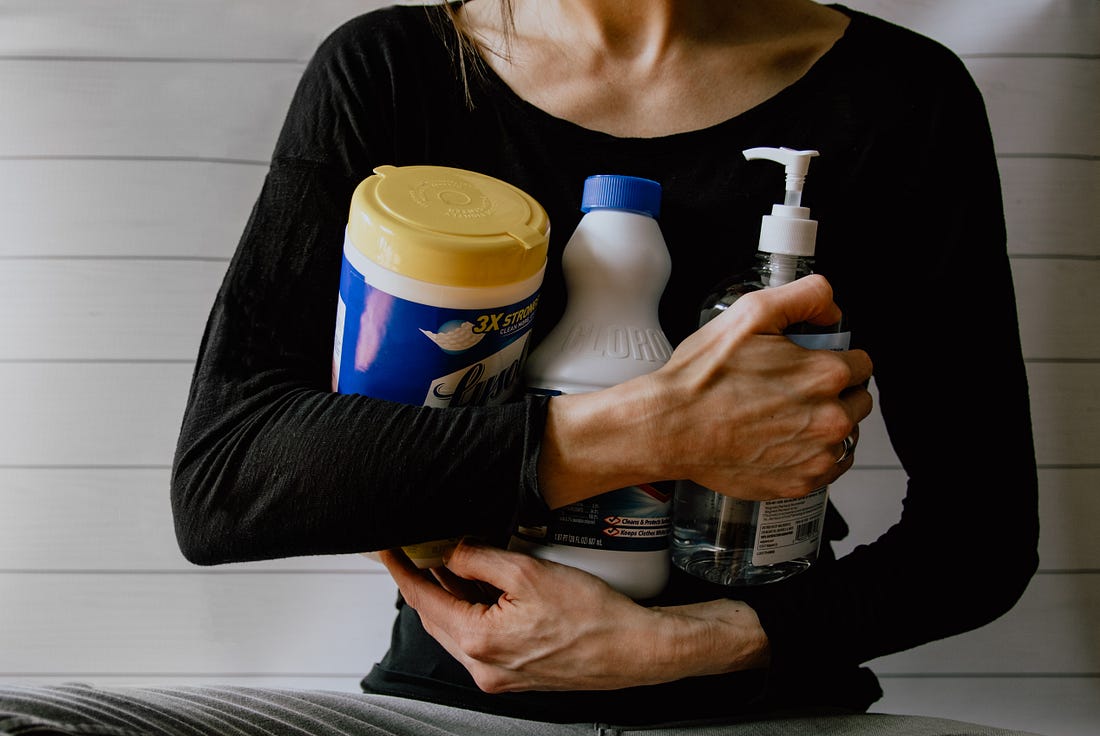
Indoor sources of VOCs include surface dust, air fresheners, camphor products (moth balls), dry cleaned items, cleaning solutions, paints, and varnishes among others.
Many of us have experienced their effects when staining, painting, or spraying without wearing protective gear.
VOC vapor exposure may cause headache, increase heart rate, nausea, dizziness, throat and nasal irritation (including nosebleeds), and breathing difficulties. These symptoms often resolve after distancing and ending exposure.
Long-term exposure to these chemicals has been linked to immune system problems, lung and heart disease, and cancer.¹
How are VOCs regulated by the EPA?
According to the EPA (Environmental Protection Agency), VOCs combined with sunlight can under certain conditions create a “ photochemical smog” outdoors and are monitored for this reason.
The EPA only regulates VOCs that have the ability to react with the oxygen, nitrogen oxide, and carbon monoxide in atmospheric air to create ground level ozone. Not all VOCs have this ability. Those that don’t are considered exempt. ³
The EPA changed its regulation terminology from ROG (reactive organic gas) to VOC (volatile organic compound). Unfortunately, many involved in the production, certification, and use of these products have applied the outdoor guidelines to indoor use.
Here’s something important to be aware of. Many VOCs that meet the outdoor exemption i.e. don’t react to produce ozone can still affect air quality and health when confined indoors but remain unregulated.
For example, both paint stripper and dry cleaning fluid are considered exempt from outdoor regulation because they don’t react with sunlight and the elements. As we all know, when used inside they can be harmful.
According to the IARC (International Agency for Research on Cancer), paint stripper in an indoor setting is a potential human carcinogen (may be cancer causing) and dry cleaning fluid a probable carcinogen.
Indoor VOCs can also react with indoor ozone and may affect sensitive individuals.
Although certification and labeling programs for VOCs do exist, there is currently no standardized criteria for indoor products.³
What are SVOCs?
SVOCs (semi-volatile organic compounds) have higher boiling points than VOCs which limits the amount of vapor released at room temperature.
SVOCs are found in indoor air and surface dust and do not smell. Unlike VOCs, these compounds don’t breakdown into the air easily but are released slowly over time through use and as they age.
SVOCs can remain indoors for long periods, are difficult to measure, and can’t be controlled with better ventilation. According to HBN (Healthy Building Network), ventilation can help but is short lasting.¹
Where are SVOCs found and how do they affect the body?

SVOCs are found in non-stick cookware, furniture, building materials, and pesticides to name a few.¹ Like VOCs, exposure is mainly by inhalation.
The Healthy Building Network (HBN) notes that a product designated as low-VOC (wall and floor coverings, etc.) can still be a source of SVOCs. That’s good to be aware of.
Here’s a link from HBN that offers product guidance on insulation, pipes, drywall, paint, and flooring, to name a few. SVOCs have been linked to endocrine disruption and breathing conditions.
Stain repellents, phthalates, and flame retardants are additional SVOC sources.
For more articles on chemical ingredient awareness including my writings on parabens and phthalates, click here.
How is SVOC use being lessened?
This all may sound dismal, but there is good news.
Consumer demand has driven the market toward more SVOC free products and it’s just the beginning. Many manufacturers have removed certain stain repellents from carpets, phthalates from vinyl flooring, and California has removed flame retardants from furniture and certain insulation products.²
What can we do to limit VOC and SVOC exposure?
So what can we do to limit or avoid exposure, and protect ourselves from these chemical ingredients? Here’s a bullet list of recommendations.
- Research and read product labels for hazardous ingredients and proper handling.
- Use personal protective equipment (PPE) as protection from harmful vapors and fluids.
- Choosing the right mask, respirator, and gloves for the job and product used is extremely important. An incorrect match won’t protect.
- Check before mixing products. Nobody wants to sign up for an accidental, unexpected chemical reaction that could release additional harmful or toxic vapors, and cause health problems.
- Complete the project outside or in a well-ventilated, indoor area with a cross breeze and fan to minimize indoor pollution.
- Postpone some winter projects and wait for warm weather ventilation opportunities.
- Purchase low or zero-VOC products if able. Although a bit pricier there is a noticeable difference in emissions.
- Avoid, limit, or eliminate using VOC and/or SVOC containing products. This is best practice, but not everyone is inclined to or can afford to start from scratch. Replacing items as they age with cleaner options may be more budget friendly. Every little bit helps.
- Looking for substitutions for SVOC containing products is helpful.
- Indoor vacuuming and dusting frequently helps remove particles.
- Opening windows for short periods in the colder weather cleansing the indoor air for humans and pets alike is good practice regardless of its effect on SVOCs.
What about measuring levels with metered testing?
There are ways to measure levels through meters and testing. As with anything, it’s out there for a price in stores and on-line.
The EAP advises to be aware that results can vary widely depending upon the method used, and there is no one tool that can measure all levels.
I haven’t tested or purchased a meter and can’t make a recommendation at this time. It seems though that the testing is uncertain and perhaps costly.
The EPA also advises consumers to be aware of “green” and “environmentally friendly” product claims as they may exclude VOC product emissions.³
VOCs and SVOCs present in both indoor and outdoor environments are found in a wide variety of products making avoidance difficult.
Certification and labeling programs need to be standardized and regulations more specific for both indoor and outdoor products to protect consumers, their families, pets, and the environment.
Although we still have a long way to go, the changes are promising. Many states and agencies are seriously regarding the health concerns associated with VOCs and SVOCs.
Some manufacturers have voluntarily removed them from certain products. Researchers are determined to find more accurate ways to accurately measure the SVOC concentrations. Public demand for cleaner product ingredients is prompting more VOC and SVOC free options that overtime will become more available and affordable.
Air quality effects all regardless of age or location. Taking measures to limit or eliminate exposure are healthy steps toward continued health and well-being.
In the meantime, knowing gives us an opportunity to maintain a healthier environment and pass the word to others.
For more information from the American Lung Association on VOCS, indoor/outdoor sources and more, click here.
For more of my articles on product ingredient awareness, click here.
If you found this information helpful, please share with others. Comments are always welcome; I would love to hear from you!
To receive future writings, please consider joining my email list.

Wishing you continued wellness.
Kimberly I
Updated January 2024 by Kimberly Iacoponi
SOURCES
1. Phoslab Environmental Laboratories. (2018, February 5). The Difference Between SVOC and VOC. Phoslab. https://www.phoslab.com/svoc-vs-voc/
2. Healthy Building Network. (2019, April Newsletter). The Next Challenge in Indoor Air Quality: SVOCs. HBN. https://healthybuilding.net/blog/509-the-next-challenge-in-indoor-air-quality-svocs
3. Environmental Protection Agency. (Updated 2023, March 14). Technical Overview of Volatile Organic Compounds. EPA. https://www.epa.gov/indoor-air-quality-iaq/technical-overview-volatile-organic-compound
4. Volatile organic Compounds. (Updated 2023, November 2). American Lung Association. https://www.lung.org/clean-air/indoor-air/indoor-air-pollutants/volatile-organic-compounds
 Eudaimonic Well-Being